Notes / Society & public life
What was actually said matters.
Translated by AI from Swedish. Read the original alongside it whenever you like.
Folks. It’s 2026, and children’s most important conversations with social services are still being documented as a few bullet points in a notebook.
Uppdrag Granskning put the spotlight on this in today’s episode (watch it on SVT Play), and the minister for social affairs agreed without hesitation: it’s a major problem. The new Social Services Act strengthens the requirements around the child’s perspective and parties’ access to information. Everyone involved should be able to see exactly what was said. And yet we continue to accept life-changing decisions being made on the basis of notes from memory.
This isn’t a privacy question. It’s a question of legal certainty. Of the child’s perspective. Of “how the hell can we still be doing this?”
(and from my side, this is no criticism of individual social workers. My daughter-in-law is one, and I know exactly what their situation looks like. My criticism is directed at the system.)
But the solution already exists. It’s legal. It’s been examined. IMY has just released its report “Transcription within social services”, in a project with Kalmar Municipality, and the conclusions are crystal clear:
✅ A legal basis exists (Article 6.1 c and e of GDPR) ✅ There is support for processing sensitive personal data (Article 9.2 h) ✅ It isn’t automated decision-making, as long as the caseworker reviews it ✅ With the right safeguards (encryption, access controls, deletion), it is both safe and effective
The legal position is clear. The technology exists. What’s missing is the will?
The minister says the evaluation of the new Social Services Act is imminent. Documentation is at the top of the agenda.
The answer already exists, and we have to stop accepting the unacceptable.
Usual caveat: I’m an investor in Klang.ai, which builds exactly this kind of solution for Swedish organisations. But I’d have said this anyway. When I see that the technology exists, the legality has been examined, and children still risk being misquoted in life-changing decisions... then it’s not “interesting to discuss”. It’s time to act.
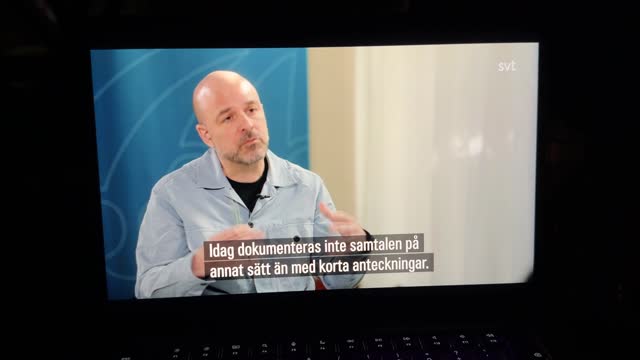
Image 1 description · AI
A still from the SVT programme discussed in the post, with Swedish subtitles about documenting conversations. This is a still; the original video remains on LinkedIn.